

Advices for hot preparation
Advices for cold preparation
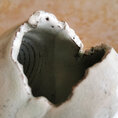
Soliflore
Kagen Soliflore: The Play of Light and Form in Ceramic
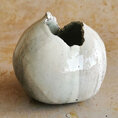
Enhance your interior with the Kagen soliflore, a poetic and architectural decorative piece that celebrates the art of floral arrangement. Designed to capture the subtle nuances of its surroundings, this minimalist vase infuses your living space with a serene, elegant, and decidedly contemporary atmosphere.
A Design Inspired by the Nuances of Light
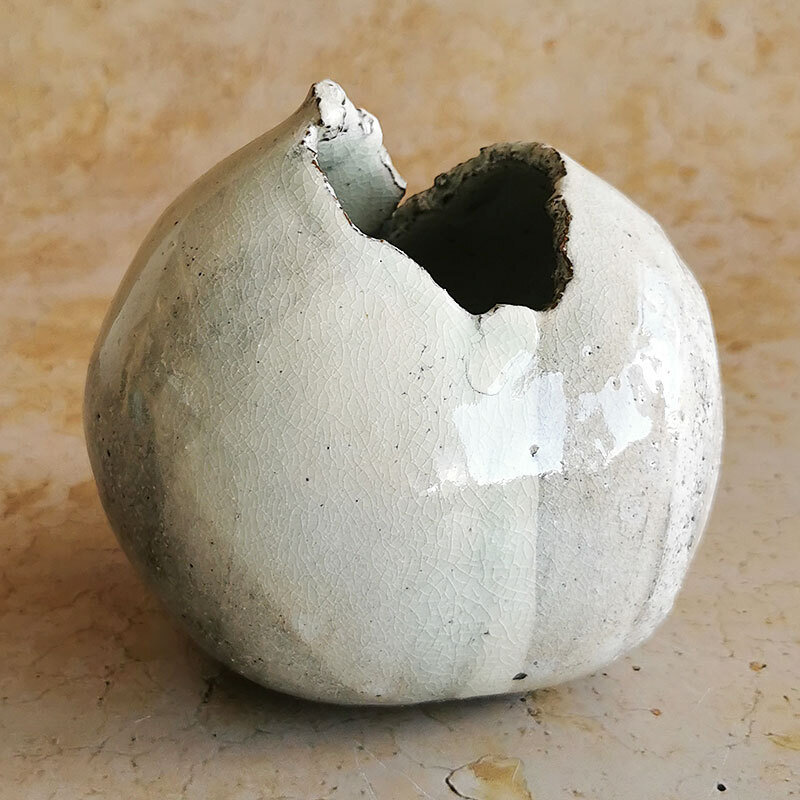
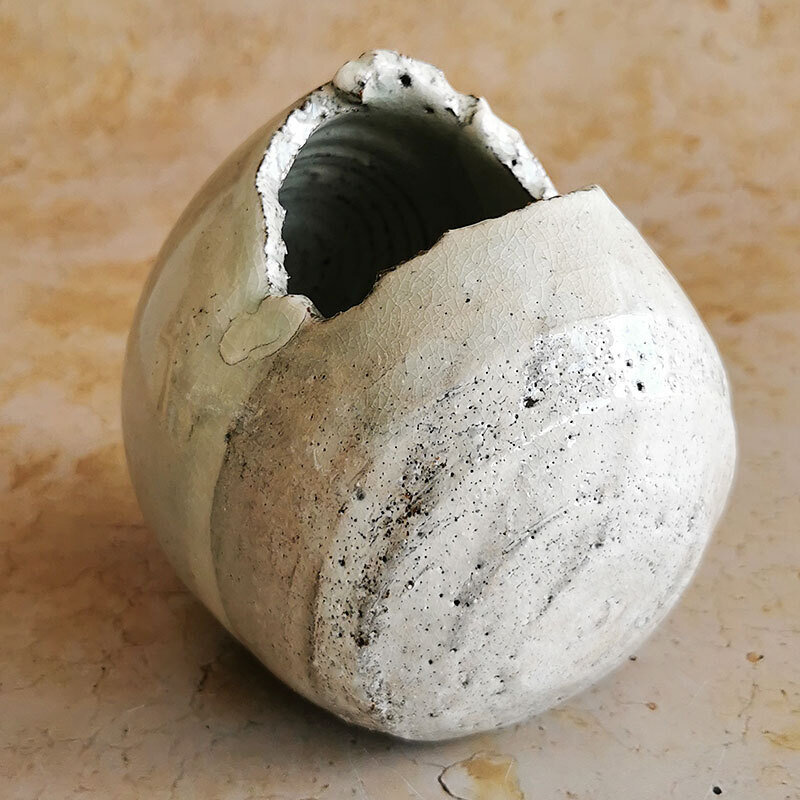
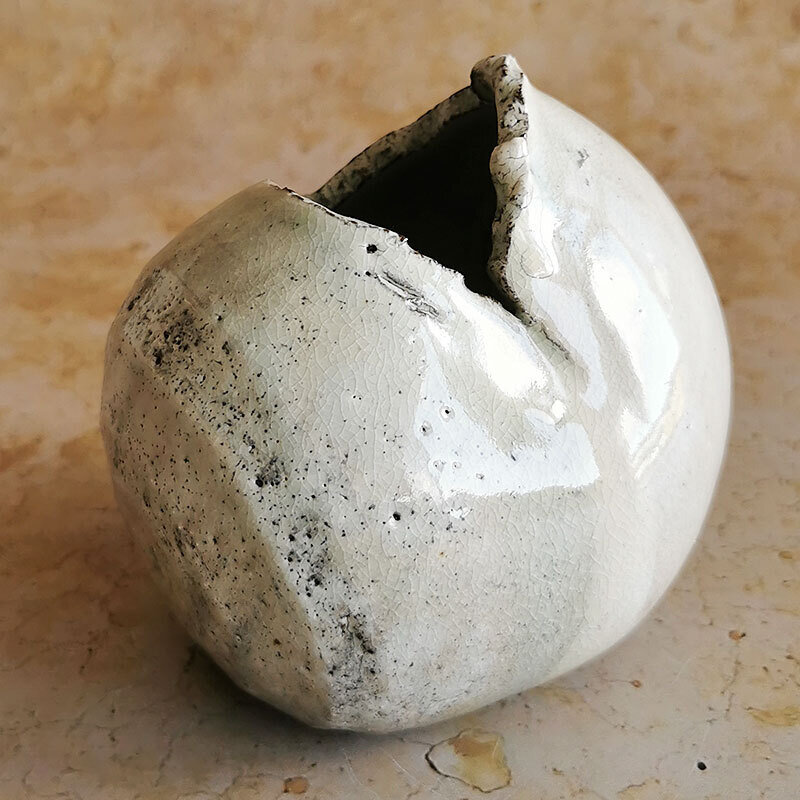
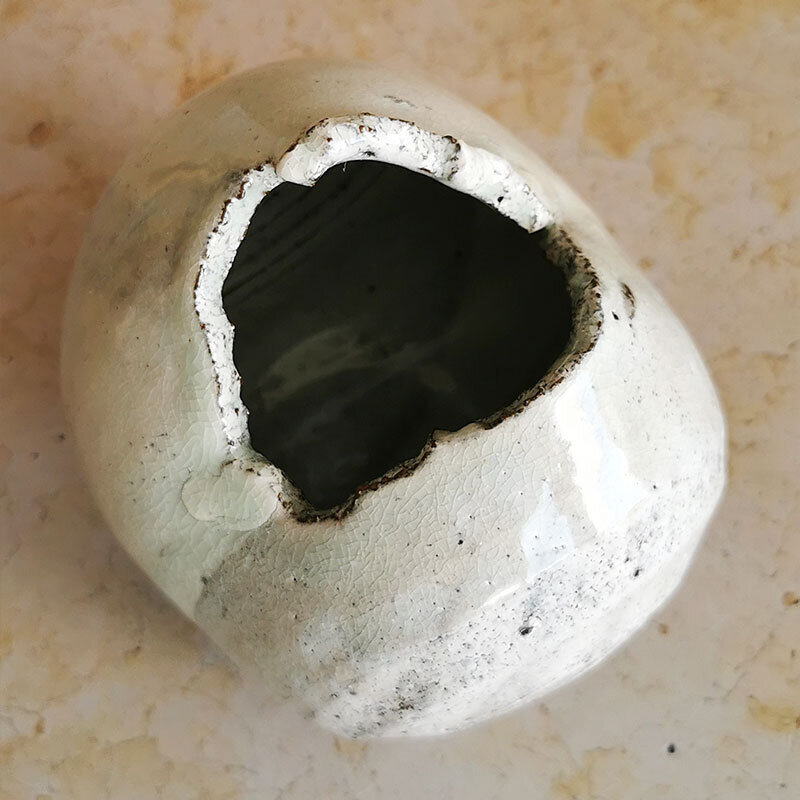
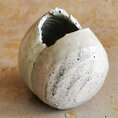
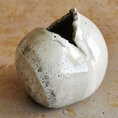
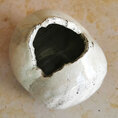
Bearing the evocative name Kagen (which evokes the subtle interplay of light and shadow, kage and gen), this soliflore features graphic lines and carefully considered volumes that create stunning visual contrasts throughout the day. Designed to hold a single flower, a delicate branch, or a sprig of greenery, it embodies the pure tradition of Chabana—the refined floral art that accompanies tea tasting in Japan. This ceramic vase is characterized by its warm, rustic texture, with a whitish "kohiki" finish and a surface effect known as "haze." Its rounded and compact shape is ideal for discreetly showcasing a single flower or a small branch on a daily basis.
The elegance of Kohiki finishes and Haze effects
This piece is distinguished by the delicacy of its Kohiki finish (dusted with white slip), a traditional technique where a thin layer of white clay is applied beneath the glaze to create a soft, matte, and exquisitely powdery appearance. This surface treatment is enhanced by oxidation and firing effects known as Haze (a Japanese term referring to subtle veils or surface shading). These random chromatic variations and light, natural marbling create a unique depth in the ceramic, ensuring that no two pieces are exactly alike. This is the very essence of Japanese craftsmanship, where clay and fire leave a singular imprint on each object.
The artisanal expertise of Tatara (Tatara-zukuri)
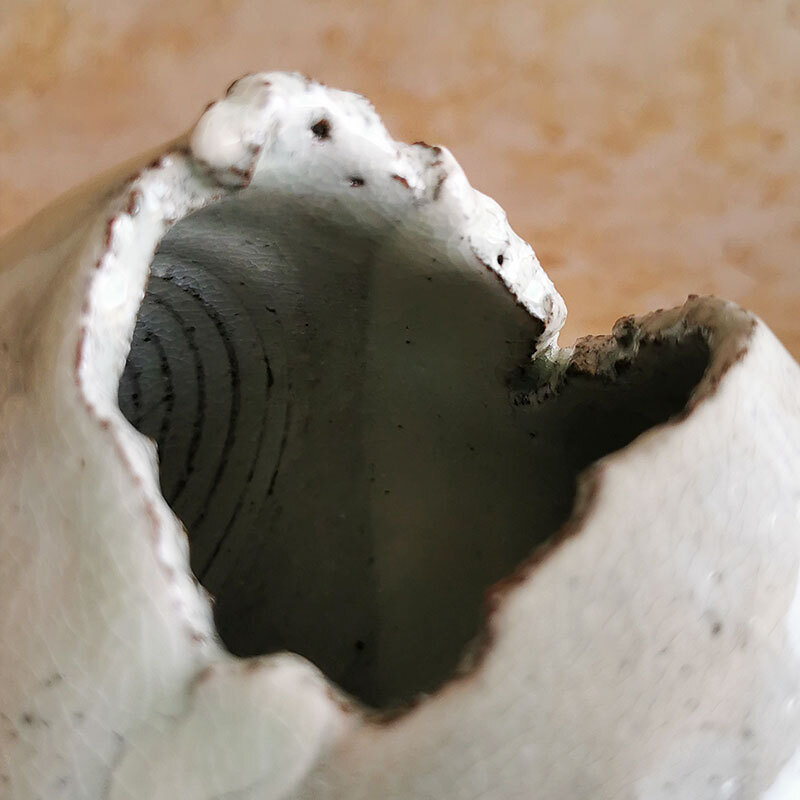
Each bud vase derives its unique character from Tatara (Tatara-zukuri), a traditional Japanese shaping method based on working with slabs of clay. Unlike traditional pottery, the artisan carefully cuts and assembles sheets of clay by hand to shape the piece. This ancestral technique preserves the natural grain of the material and gives the object organic lines, subtle poetic irregularities, and an incomparable raw feel. It is the very expression of Wabi-Sabi: the appreciation of beauty in imperfection and natural simplicity.
Height: 12 cm
Width: 12 cm
Material: Ceramic
Soliflore
classé dans : Soliflore
Kagen Soliflore: The Play of Light and Form in Ceramic
Enhance your interior with the Kagen soliflore, a poetic and architectural decorative piece that celebrates the art of floral arrangement. Designed to capture the subtle nuances of its surroundings, this minimalist vase infuses your living space with a serene, elegant, and decidedly contemporary atmosphere.
A Design Inspired by the Nuances of Light
Bearing the evocative name Kagen (which evokes the subtle interplay of light and shadow, kage and gen), this soliflore features graphic lines and carefully considered volumes that create stunning visual contrasts throughout the day. Designed to hold a single flower, a delicate branch, or a sprig of greenery, it embodies the pure tradition of Chabana—the refined floral art that accompanies tea tasting in Japan. This ceramic vase is characterized by its warm, rustic texture, with a whitish "kohiki" finish and a surface effect known as "haze." Its rounded and compact shape is ideal for discreetly showcasing a single flower or a small branch on a daily basis.
The elegance of Kohiki finishes and Haze effects
This piece is distinguished by the delicacy of its Kohiki finish (dusted with white slip), a traditional technique where a thin layer of white clay is applied beneath the glaze to create a soft, matte, and exquisitely powdery appearance. This surface treatment is enhanced by oxidation and firing effects known as Haze (a Japanese term referring to subtle veils or surface shading). These random chromatic variations and light, natural marbling create a unique depth in the ceramic, ensuring that no two pieces are exactly alike. This is the very essence of Japanese craftsmanship, where clay and fire leave a singular imprint on each object.
The artisanal expertise of Tatara (Tatara-zukuri)
Each bud vase derives its unique character from Tatara (Tatara-zukuri), a traditional Japanese shaping method based on working with slabs of clay. Unlike traditional pottery, the artisan carefully cuts and assembles sheets of clay by hand to shape the piece. This ancestral technique preserves the natural grain of the material and gives the object organic lines, subtle poetic irregularities, and an incomparable raw feel. It is the very expression of Wabi-Sabi: the appreciation of beauty in imperfection and natural simplicity.
Height: 12 cm
Width: 12 cm
Material: Ceramic

4 free samples with your order

10% discount. Sign up for our newsletter

LOYALTY PROGRAM. Earn points with your orders and win prizes. €1 = 10 points