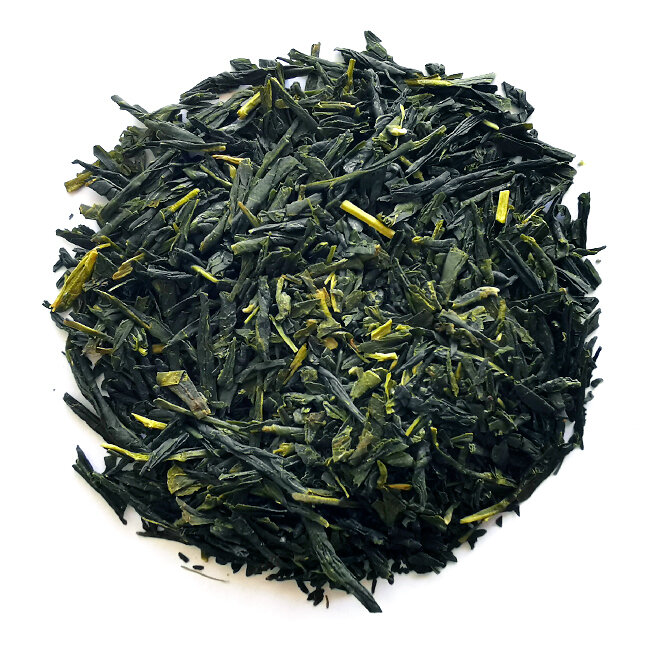
Japan boasts a unique tea culture, centered on the pursuit of absolute freshness and perfect balance. At LUPICIA, we perpetuate this tradition by selecting our teas directly from the most prestigious gardens.
CHOOSING THE RIGHT JAPANESE GREEN TEA. Why choose LUPICIA Japanese green teas?
Choosing LUPICIA means benefiting from the expertise of a world-renowned Japanese tea house. Our mission is to make the excellence of Japan's gardens accessible while guaranteeing impeccable food safety and freshness.
Guaranteed freshness
Unlike traditional distribution channels where tea passes through numerous intermediaries, LUPICIA prioritizes direct sourcing from producers. Our buyers visit Japanese plantations during each harvest to select the finest batches of Sencha, Gyokuro, and Matcha. The leaves are quickly packaged under a protective atmosphere (nitrogen) to halt aging and preserve that fleeting "fresh leaf" aroma.
Rigorous Quality Control
Every tea offered in our shop receives special attention. Our commitment to quality is based on strict testing:
- Food Safety: Systematic testing for pesticide residues according to the most demanding standards.
- Purity: Use of cutting-edge technologies (magnets, optical sorters) to guarantee the complete absence of foreign matter.
- Expert Tasting: Each batch is tasted by our Tea Masters to validate its aromatic profile before being offered for sale.
A Unique Tasting Experience
Whether you are a connoisseur of premium single-origin teas or original blends, LUPICIA offers a wide range of green teas. Our collection includes rare teas from small local producers and unique flavored creations, crafted with natural ingredients to enhance the green tea base without ever overpowering it.
Green Tea Production: The Art of Japanese Steaming
Unlike teas produced in China or India, Japanese green tea is unoxidized. To preserve its emerald color and properties, the oxidation of the leaves is stopped immediately after harvesting by a steam drying process.
This crucial step, which lasts between 20 and 80 seconds, destroys the enzymes responsible for oxidation. It is this "moist" heat treatment that develops the marine, vegetal, and buttery notes characteristic of the "Umami" profile. The leaves are then rolled to break down the cells and release the essential oils, before being dried and sorted by hand. Our commitment to quality guarantees that each batch undergoes six additional quality control steps to eliminate any foreign matter before being packaged in a protective atmosphere.
Gardens and Terroirs: A Geography of Taste
Each cup tells the story of a terroir. The quality of a tea depends on the harvest calendar (from mid-April to September):
- The first harvest (Shincha): In April-May, this yields the most refined teas, rich in nutrients and less astringent.
- Geographical influences: From the persistent mist of Shizuoka (Japan's leading producer) to the fertile volcanic soils of Kagoshima, each climate defines the character of our teas. The diversity of climates and the altitude of the gardens directly influence the concentration of amino acids and the sweetness of the brew.
Natural Benefits: Energy, Antioxidants, and Serenity
Consumed for millennia to promote meditation, Japanese green tea is a cornerstone of health in Japan, a country with record longevity. Its exceptional richness in catechins (EGCG), powerful polyphenols, helps fight free radicals and cellular aging.
- Alert Relaxation: Thanks to L-theanine, green tea promotes deep relaxation without drowsiness, contrasting with the abrupt stimulating effect of coffee.
- A Wellness Ally: Studies highlight its role in regulating fats and strengthening the immune system.
HOW TO PREPARE YOUR GREEN TEA PROPERLY? The quest for the perfect infusion
Preparing Japanese tea is an art of precision. The water temperature is the key factor: water that is too hot (95°C+) will burn the leaves and release an unpleasant bitterness.
- The golden rule: Aim for a temperature between 60°C and 80°C. A helpful tip is to pour hot water into your empty cups to preheat them; by the time you transfer the water to the teapot, it will have cooled to the ideal temperature (around 75-80°C).
- The Kyusu, the essential accessory: This traditional earthenware (clay) teapot has a fine filter that allows the leaves to unfurl freely. The porous clay (like that of Tokoname) interacts with the minerals in the water, enhancing the flavors with each infusion. Unlike a tea ball that compresses the leaves, the Kyusu leaves the necessary space for the aromas to fully develop.
WHAT ARE THE DIFFERENT TYPES OF JAPANESE GREEN TEAS? Glossary of Varieties: Find your ideal tea
To navigate our collection, here are the main families of LUPICIA green teas:
- Sencha: The most popular tea. Balanced, it offers notes of freshly cut grass and a lively freshness. Ideal for the morning.
- Gyokuro: The exceptional "shade-grown tea." Covered before harvesting to boost chlorophyll and umami, it is velvety and complex.
- Genmaicha: A rich blend of green tea and roasted brown rice. Its nutty notes are very appealing to beginners.
- Hojicha: Green tea roasted at a high temperature. Almost caffeine-free, it offers woody aromas and can even be enjoyed in the evening.
- Matcha: Finely ground powder, used in the tea ceremony or for its concentrated benefits in cooking.
HOW TO PROPERLY STORE YOUR JAPANESE GREEN TEAS? Storage tips: Preserve freshness
Green tea is a "living" product, very sensitive to air, light, and odors. To preserve its delicate aromas:
- Keep the tea in its original, tightly sealed bag or use an airtight tea caddie.
- Store it in a cool, dry place.
- For premium teas like Gyokuro or Matcha, you can store them in the refrigerator (making sure the container is perfectly airtight to prevent odor transfer).