Where to Buy a fine Japanese matcha ? Why choose LUPICIA Matcha?
At LUPICIA, we select our tea leaves directly from the finest producers in
Uji matcha (Kyoto) and
Kagoshima matcha. Traditionally stone-ground, our
Japanese matcha retains a vibrant emerald green color and an exceptional richness in antioxidants (EGCG). Whether you're looking for the "Umami" sweetness of a "ceremonial" grade or the intensity of a culinary matcha, our range will suit everyone from beginners wanting to discover matcha to the most discerning connoisseurs. Enjoy our matchas now by ordering on our website or directly in our
LUPICIA Paris store at 40, rue Bonaparte (75006).
Ceremonial, Premium, or Classic grade Matcha. What are the different grades of Matcha?
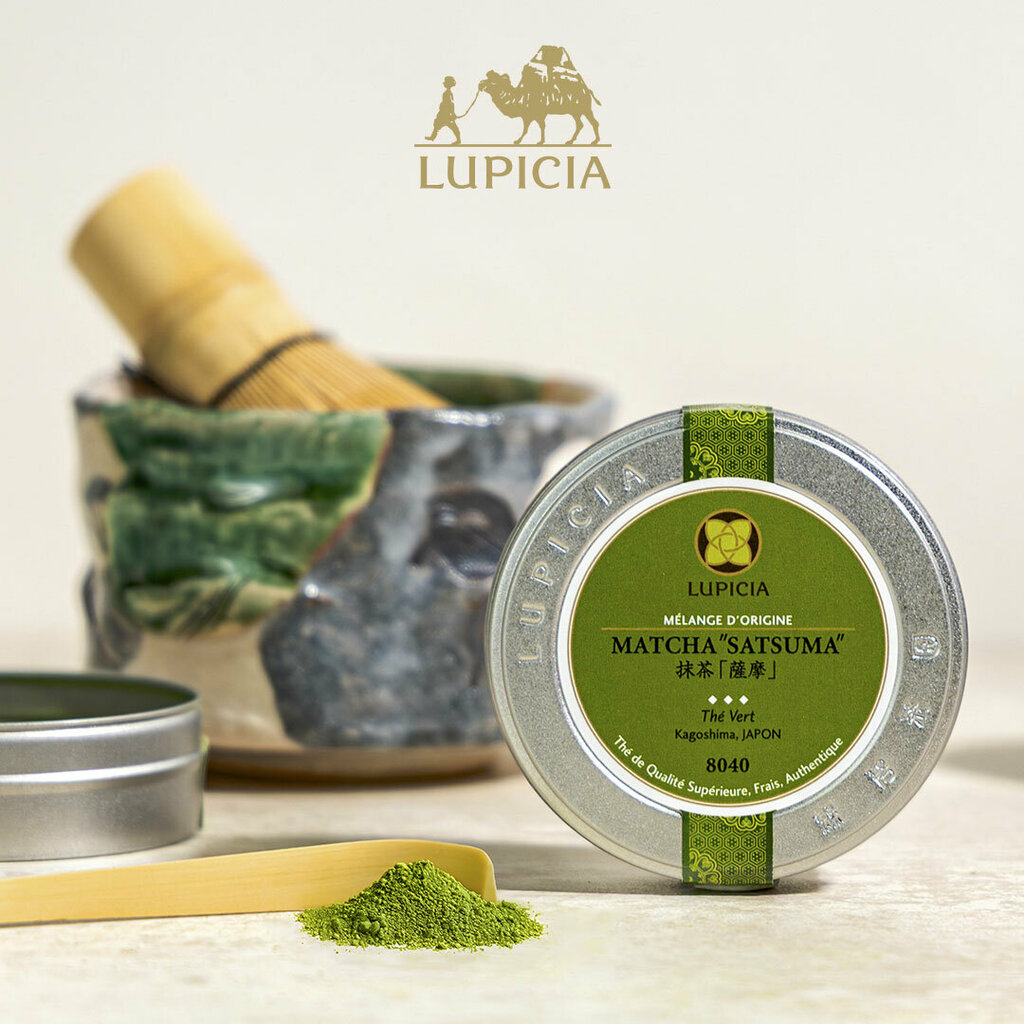
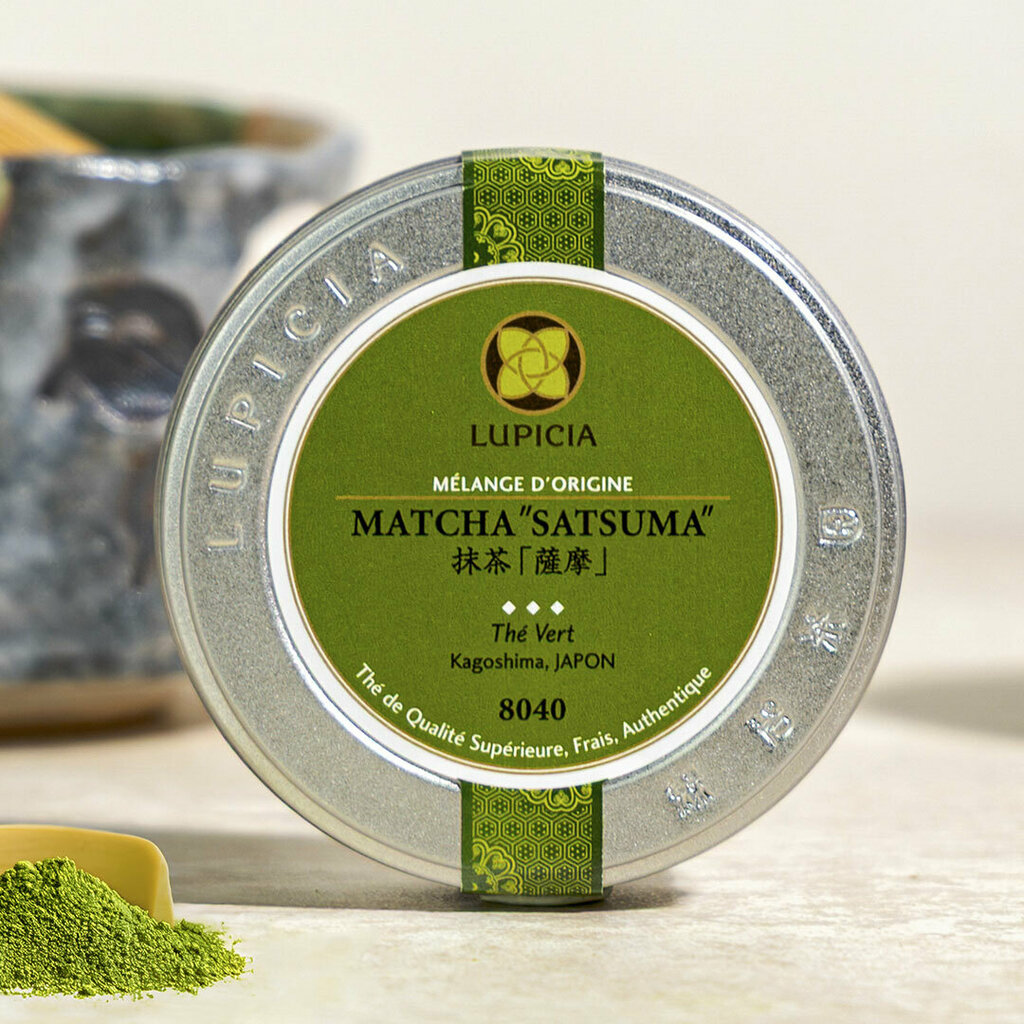
- Ceremonial Grade: For a pure, vibrant, and smooth tasting experience, best enjoyed neat as Usucha (light tea) or Koicha (thick tea). Enjoy a matcha that is not bitter and is smooth on the palate, like our "Kurama" and "Satsuma" matcha, ideal for introducing you to Japanese matcha.
- Premium Grade (or Superior grade): Ideal for enthusiasts seeking a smoother, more aromatic expression of Japanese Matcha, while retaining the finesse and complexity of a high-quality matcha.
- Classic Grade: Perfect for your pastries, ice cream, or for creating gourmet Matcha Latte.
- Instant Matcha: Prepare matcha without a whisk and enjoy it at the office or on vacation with our pre-measured matcha sticks. Easy to use, they can also be used to prepare your matcha latte.
What is the difference between Ceremonial and Culinary Matcha?
Choosing your matcha tea can seem complex, given the wide range of shades of green and prices. To make the right choice, it all depends on how you intend to use it.
1. Ceremonial Grade Matcha: THE TOP OF THE LINE of Japanese Tea
Ceremonial Grade Matcha is the most prestigious quality. Made from the first spring harvests, the tea leaves (Tencha) are shaded for three weeks before being stone-ground.
- Aromatic Profile: A natural sweetness, a smooth texture, and rich umami notes. It has no bitterness.
- Usage: Enjoy it pure, whisked with hot water (70-80°C) using a bamboo whisk (Chasen).
- Why choose it? For a moment of meditation and to benefit from all the antioxidants in green tea.
2. Premium Grade Matcha (or SUPERIOR)
This is the ideal compromise. Slightly more robust than the Ceremonial Grade, it remains delicate enough to be enjoyed neat, but its character also shines through beautifully when mixed with milk.
- Use: This is the best matcha for latte. Its more pronounced flavor cuts through the sweetness of milk (dairy or plant-based) without being overpowered.
3. Culinary Grade Matcha (Culinary/Pastry Grade)
From later harvests, this matcha is designed to withstand cooking.
- Flavor Profile: A more pronounced bitterness and a less vibrant forest green color.
- Use: Ideal for Japanese pastries, ice cream, cakes, or smoothies.
- Why choose it? Its intense flavor will perfectly complement your recipes without being masked by sugar or butter.
What is Matcha?
Traditionally used in the
tea ceremony (Chanoyu), Matcha is the only tea whose entire leaf is consumed after being ground into a fine powder, unlike other teas that are brewed. Very rich in catechins and amino acids, it is often accompanied by small Japanese sugars (
Wasanbon) to balance its refined bitterness. Matcha belongs to the same family as Gyokuro green tea. Tencha tea leaves (dried and crumbled leaves with the stems and veins removed) are used, which are then ground into a fine powder using a stone mill.
● Shade-Growing Tea
From the beginning of April, the tea plantations are covered with thatch or netting to deprive the tea plants of sunlight. This
shade-growing method, inherited from the 15th century, is demanding but essential: by blocking the light, the astringency of the tannins is reduced and the
theanine is preserved. This process gives
ceremonial matcha its sweet "umami," its aromatic richness, and its unique color.
● From Processing to Stone Grinding
After harvesting in mid-May, the leaves undergo a rapid steaming process at high temperature to halt oxidation and preserve their freshness. Once dried and sorted to become Tencha, the leaves are ground using a stone mill (
Ishi usu).
The process is deliberately slow: a mill produces only
40 to 60g of powder per hour. This slowness prevents overheating from friction, which could alter the quality of the tea. The matcha is then sealed in a protective atmosphere to guarantee its freshness until it reaches your bowl.
WHAT ARE THE HEALTH BENEFITS OF MATCHA ? A concentrated source of vitality
Consuming matcha means absorbing 100% of the tea leaf's nutrients:
- Antioxidants: An exceptional concentration of catechins (EGCG) to combat cellular aging.
- Energy and Concentration: Its caffeine (theine) is released gradually thanks to theanine, providing stable alertness for several hours without the stimulating effect of coffee.
- Detox: Rich in fiber, vitamins, and minerals (potassium, magnesium, zinc).
- Relaxation: Theanine promotes the production of alpha waves in the brain, inducing a state of deep relaxation.
- Fiber and Vitamins: It contains approximately 40% dietary fiber, as well as essential vitamins and minerals (potassium, magnesium, zinc).
HOW TO PROPERLY PREPARE your Matcha?
Preparing Matcha green tea is a daily ritual that requires a few specific accessories available at LUPICIA:
- A Matcha Bowl (Chawan): To hold the powder and water, usually with a flat bottom.
- A Bamboo Whisk (Chasen): Essential for creating a smooth emulsion, thanks to its very flexible blades.
- A spatula (chashaku): For precisely measuring and easily scooping the powder, as it is very fine and easily dispersed.
- A sieve (optional): To remove lumps and achieve a perfectly smooth texture.
- An airtight container: To keep the matcha powder protected from the elements.
> Discover our quality matcha accessories
Making perfect matcha requires a few simple but precise steps to achieve that sought-after smooth froth. Here are a few things to keep in mind:
- Sifting: Sift 1 to 2 grams of powder to avoid clumps if your matcha requires it.
- Water: Use filtered water heated to a maximum of 80°C (never use boiling water).
- Whisking: Using a bamboo whisk (chasen), whisk vigorously in a "W" motion until a fine foam appears.
HOW TO PROPERLY STORE YOUR MATCHA AFTER USE?
Matcha tea is a living product, extremely sensitive to oxidation, light, and humidity. Improper storage quickly alters its emerald green color and degrades its precious antioxidants. Here are our expert tips to preserve the freshness of your LUPICIA matcha:
- Total darkness: Always store your matcha in its original tin or an opaque container. Light is the number one enemy of chlorophyll.
- The secret to freshness: To keep the umami flavor intact, place your tightly closed tin in the refrigerator. Tip: Before opening, let the tin sit at room temperature for a few minutes to prevent condensation on the fine powder.
- A perfect seal: Matcha absorbs surrounding odors. Make sure the lid is completely airtight.
- The 3-month rule: Once opened, we recommend consuming your tea powder within 2 to 3 months to enjoy its full aromatic potential.
What's the difference between matcha and regular green tea?
Matcha is green tea ground into a fine powder. Unlike a regular infusion where the leaves are discarded, here you ingest the entire tea leaf. This means you absorb about
10 times more antioxidants and nutrients than with a cup of brewed green tea.
Can you drink matcha every day?
Absolutely. Thanks to the presence of
L-theanine, an amino acid that promotes relaxation, the effects of the caffeine (theine) in matcha are released gradually. This provides stable energy and increased focus for 4 to 6 hours, without the "peak and crash" effect of coffee.
Discover our book on matcha by LUPICIA
A true invitation to a sensory journey, LUPICIA's book "Matcha" unveils this "mysterious green" that has become a staple of global gastronomy. In three informative and richly illustrated chapters, this work explores the deep roots of matcha, from the preservation of Japanese cultural heritage to its modern success in the salons of New York and Paris.
Readers will discover the secrets of its demanding production: the shade-grown 15th-century cultivation, the hand-sorting of the Tencha, and the slow grinding with a stone mill, guaranteeing unparalleled freshness and an emerald color. Beyond tradition, the book highlights matcha's exceptional health benefits, a true concentrate of antioxidants and a source of serene energy.
The second part is practical and creative, guiding enthusiasts in the art of creating a smooth froth with the Chasen whisk, while also opening up a world of culinary possibilities. From matcha latte recipes to tips for pastries, confectionery, and even savory seasonings, LUPICIA shares its expertise in incorporating this exceptional tea into everyday life.
Finally, the book reaffirms LUPICIA's commitment: to offer teas of rare quality, packaged in a protective atmosphere to preserve the essence of Japan in every cup. An essential guide to transforming a simple tasting into a true moment of harmony and vitality.
> Order our book "Matcha" nowThe Tea Ceremony (Chanoyu)
Matcha is the central element of the tea ceremony, or
Sadō. Codified by tea masters like Sen no Rikyū, this practice is based on four principles: harmony, respect, purity, and tranquility. At LUPICIA, we perpetuate this spirit of sharing through our traditional accessories: Chawan bowls, Chashaku spatulas, and Chasen whisks.
A Global Growth That Shows No Slowdown
At the very heart of tea culture, developed in Japan over many centuries,
the green tea powder called Matcha and its preparation customs have greatly contributed to safeguarding Japanese cultural heritage and preserving a sense of aesthetics and local traditions unique to Japan. However, for the past decade, and particularly since 2010, the veil has been lifted on Matcha, which is no longer an Eastern mystery. It is now prized worldwide for its taste, its positive effects on health, and the vitality it provides. Today, the best chocolatiers in Paris adorn their windows with delectable creations combining cocoa and matcha, while matcha lattes offered in trendy New York salons, where the music of jazzman Robert Glasper plays on repeat, are a resounding success. From deep jade to luminous emerald, the magnificent shades of green in matcha tea will evoke for some the monochrome paintings of Yves Klein (1928-1962), the famous French artist for whom green represents the very essence of life.





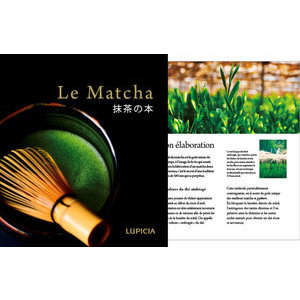 BOOK "LE MATCHA"
9,50 €
BOOK "LE MATCHA"
BOOK "LE MATCHA"
9,50 €
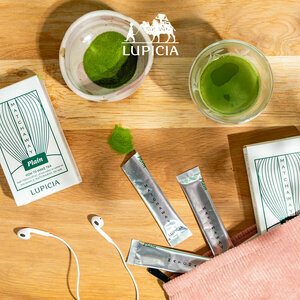 MATCHAWAY x10 STICKS
Matcha
16,50 €
MATCHAWAY x10 STICKS
MATCHAWAY x10 STICKS
Matcha
16,50 €
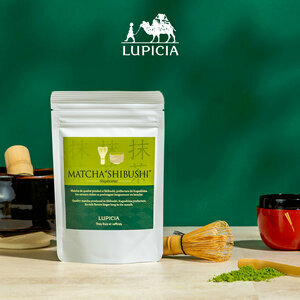 MATCHA SHIBUSHI 50g
Matcha
26,00 €
MATCHA SHIBUSHI 50g
MATCHA SHIBUSHI 50g
Matcha
26,00 €
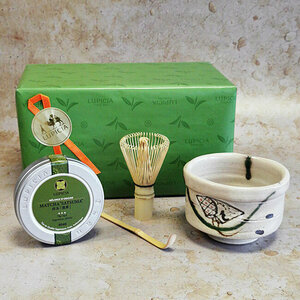 All-in-one matcha set 250ml
All in one set
86,80 €
All-in-one matcha set 250ml
All-in-one matcha set 250ml
All in one set
86,80 €
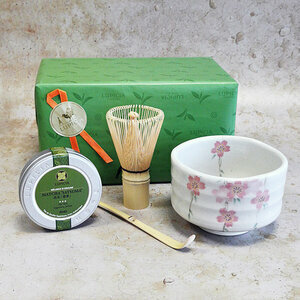 All-in-one matcha set 300ml
All in one set
110,80 €
All-in-one matcha set 300ml
All-in-one matcha set 300ml
All in one set
110,80 €

